The InstrumentationHub system brings easy and secure remote connectivity with instrumentation and control capabilities at a lower cost than alternative networked devices.
Start measuring and building instruments and control experiments and processes using cheap, off the shelf, sensors immediately with no programming. Control limitless number of sensors, locally and remotely.
What do we fix?
Building complex instruments, setting up instrumentation and actuator control for the average user is hard. Professional systems are costly. And even if cost is manageable, integrating instrumentation into a heterogeneous environment with remote connectivity is an issue.
There are many companies building board level products with sensors but integrating these require technical knowledge and time. There is no product that is plug and play.

Typically to be able to use a sensor or an actuator, the user is expected to add some code to an Arduino or RaspberryPi like device, compile and load code, deal with cabling, power supplies etc. and then develop a user interface.
There are products that plug into a USB port and do one thing but none that integrate multiple devices simultaneously. If you want to measure the temperature in your distillation still while controlling the heater and in the meanwhile monitor the VOC compounds in the air and do your monitoring remotely, you do not have an easy solution.
Similarly if you want to control your hydroponics system, measure pH, temperature and electrical conductivity in your nutrient solution, measure intensity and spectral distribution of light supplied by lamps and switch them on and off based on growth phase algorithms, you do not have an easy and cheap solution. More sophisticated growth environments require CO2 monitoring and control of CO2 generators. These can all be accomplished easily by the InstrumentationHub system.

Building a flexible home automation system that does more than control a thermostat is not easy with available offerings. Even the simplest ones compromise your privacy. With the InstrumentationHub system, for example, you can build an irrigation system that can monitor the soil humidity and check the weather report to determine optimal watering. You can add a pressure monitor to your sprinkler water supply to determine the time for maximum city water pressure for best watering and also find leaks. Even start a booster pump if required. All this can be done with the InstrumentationHub system with complete remote control access, alarms sent to your remote devices and privacy. It’s disturbing to come home after a vacation and finding a sprinkler valve stuck open that has been running continuously for 2 weeks.
InstrumentationHub system provides all the monitoring information and control features via our subscription cloud services that let users own their own data. Users can accomplish everything that can do locally from a remote handheld or desktop device.

Following in the same vein, easy and inexpensive process measurement with aggregated sensors and control in labs and industrial concerns is a need addressed by the InstrumentationHub system.
We give our users an easy and inexpensive set of tools to build their own measurement and control systems.
What does the LD100 Interface Board do?
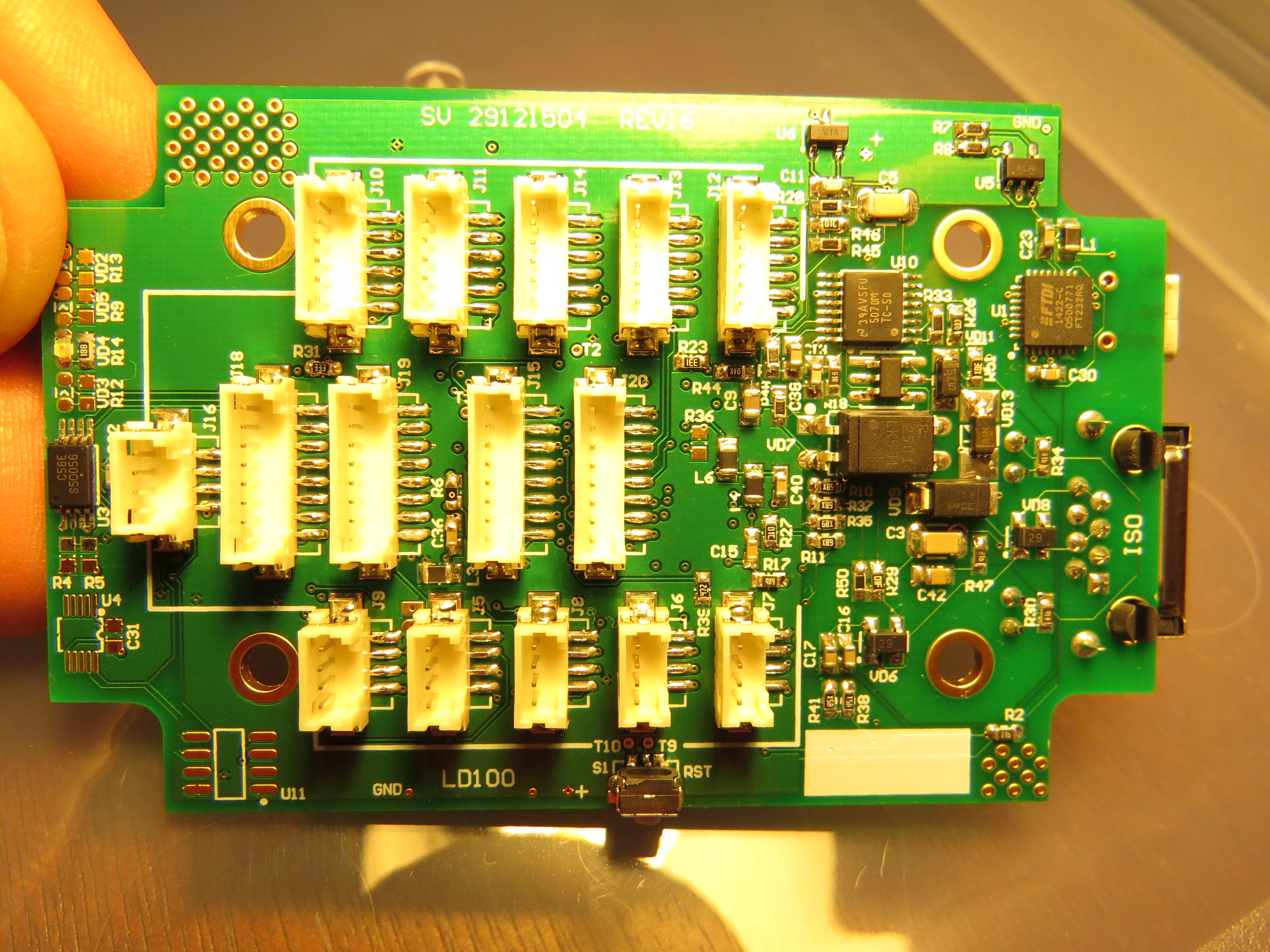
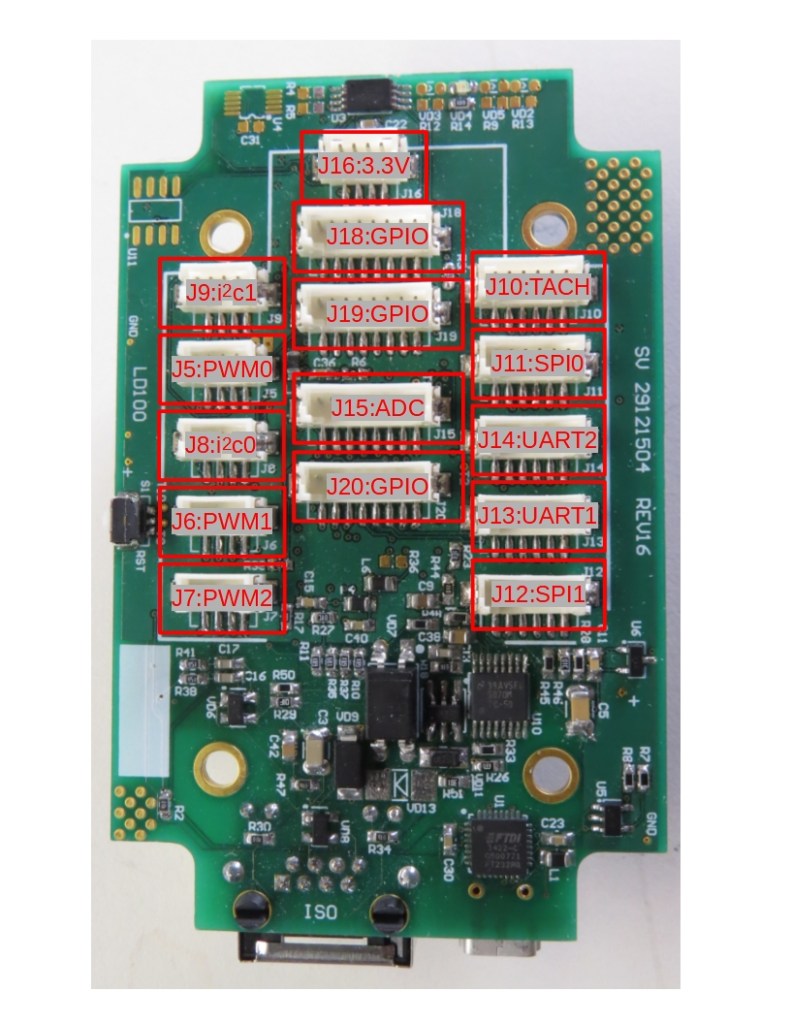
LD100 is a network connected instrumentation board. It has a multiple interfaces to connect to breakout boards and sensors.
Our aim is to provide the software and hardware with support for hundreds of sensors and signal processing breakout boards available in the market. The list of sensors we support is already substantial and we add new devices on an ongoing basis.
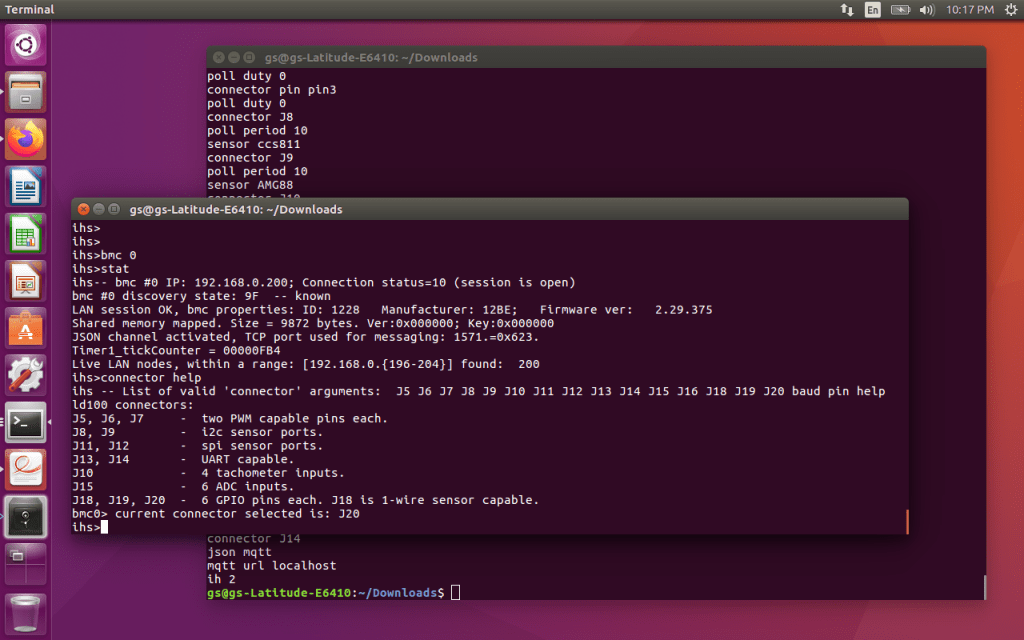
For the basic user, no user programming is required. Just plug in and be operational in minutes. Supported sensor drivers are built into the user application which runs on a host such as a PC. Sensors that are plugged in are user selectable from the GUI and immediately usable.
We did the hard work of developing the software so you don’t have to.
Users can add their own sensors. Users also can write their control software in Python or other high level languages that read sensors and activates the actuators.
User Experience
- Attach sensor with appropriate cable to LD100 board.
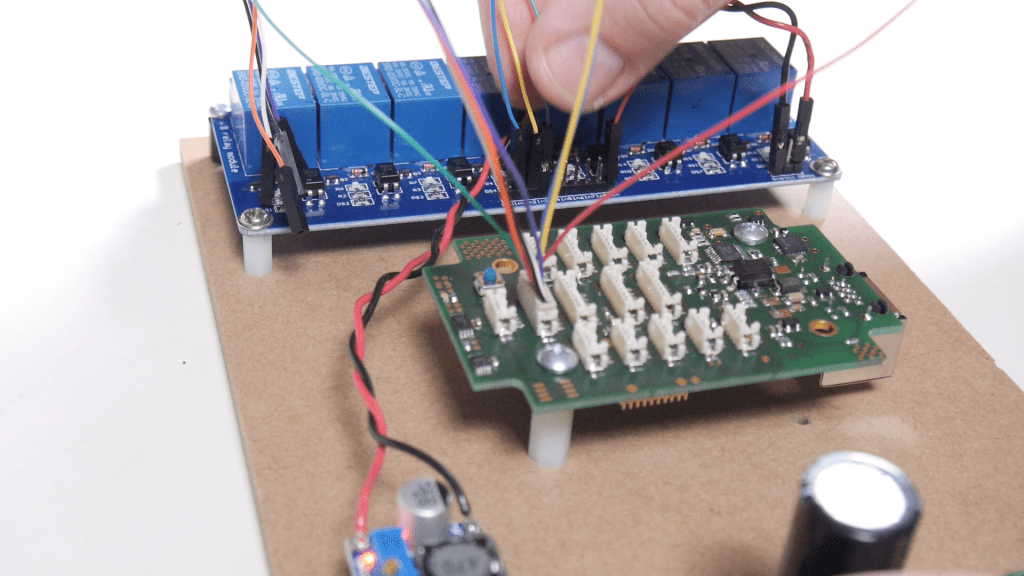
- Connect LD100 to network cable or USB.
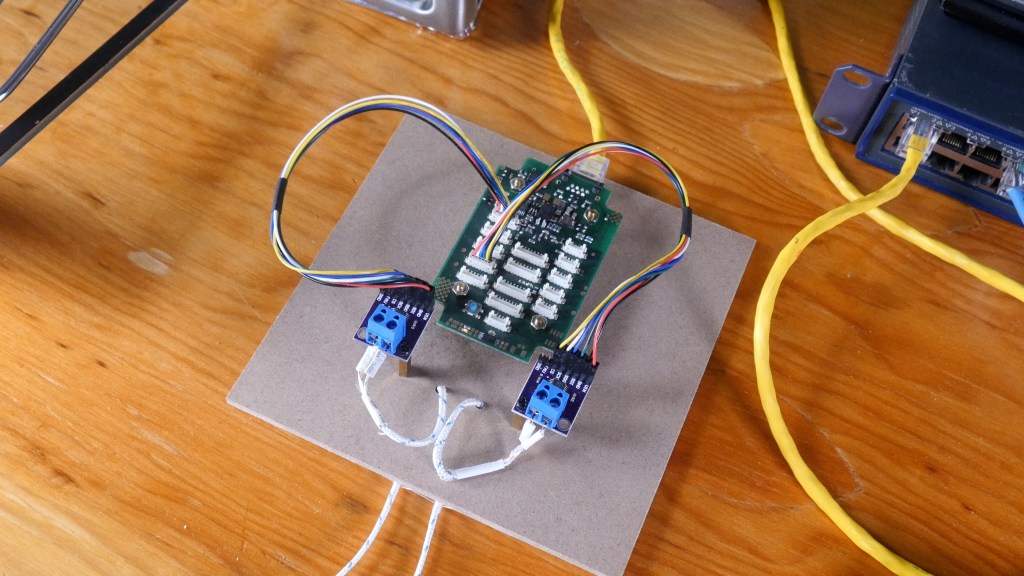
- Select sensor from user interface on PC.
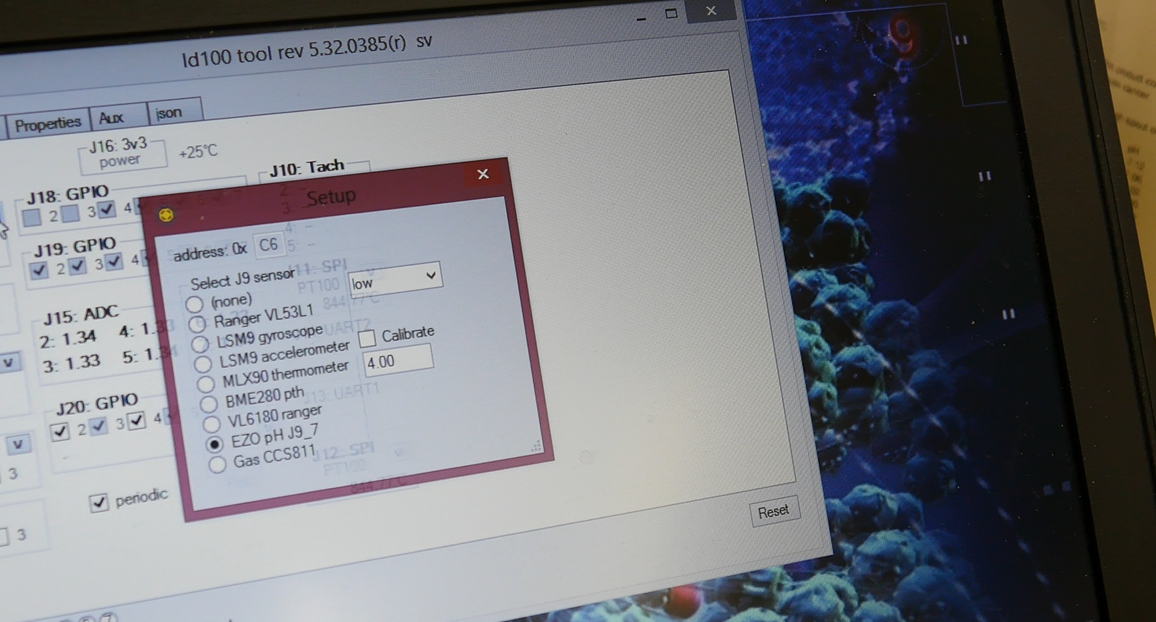
- Start measuring and controlling, either locally or from a remote location.
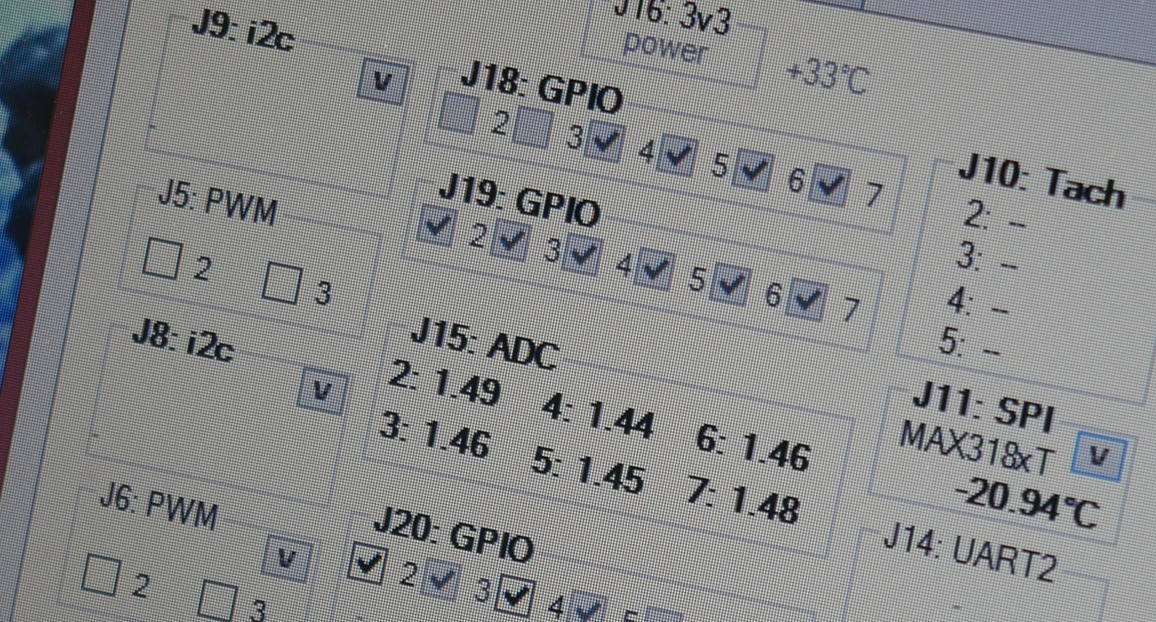
- If you are so inclined, write your own process control scheme or GUI with python or other computer language. We provide an open MQTT/JSON API and sample application sources. Add your own device if needed.
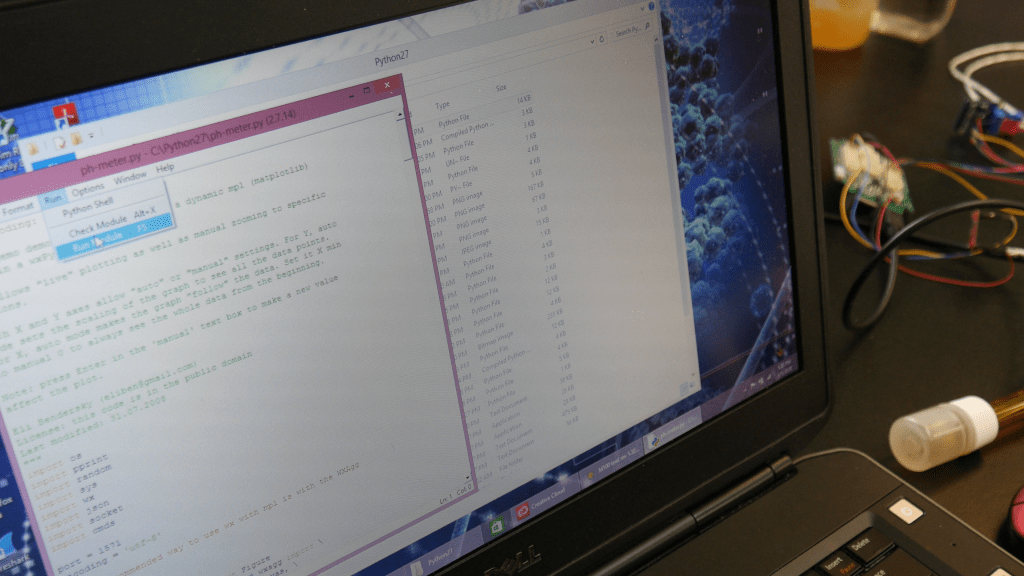
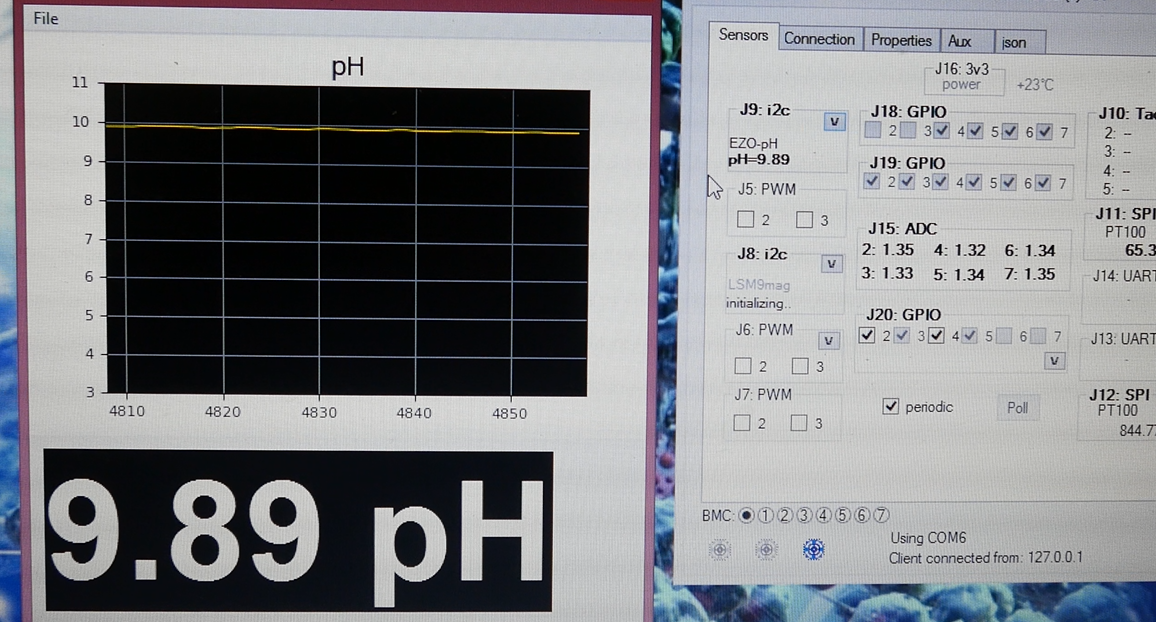
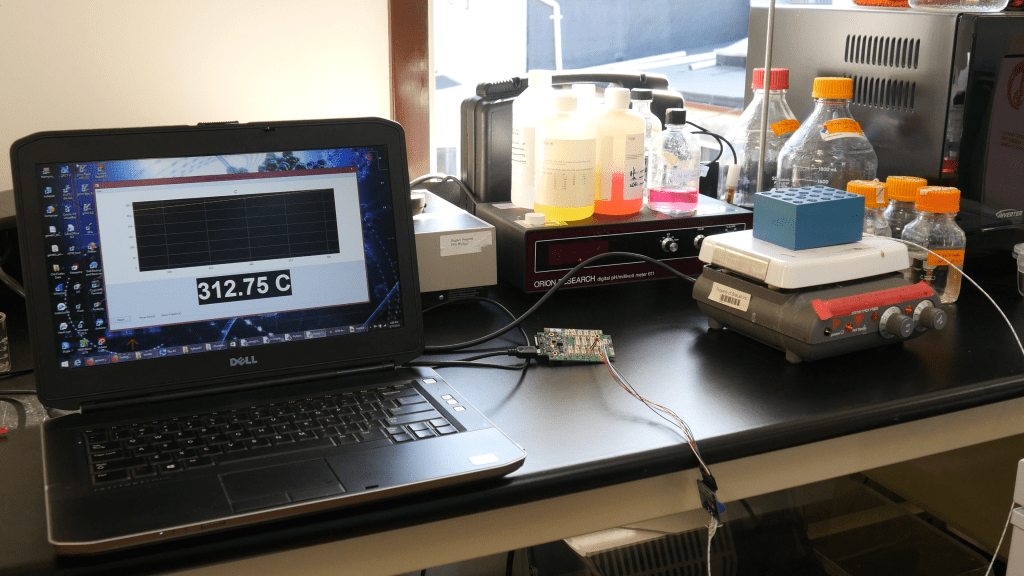
- Dream up and construct your home, agricultural, scientific, industrial etc. instrument system & controller.
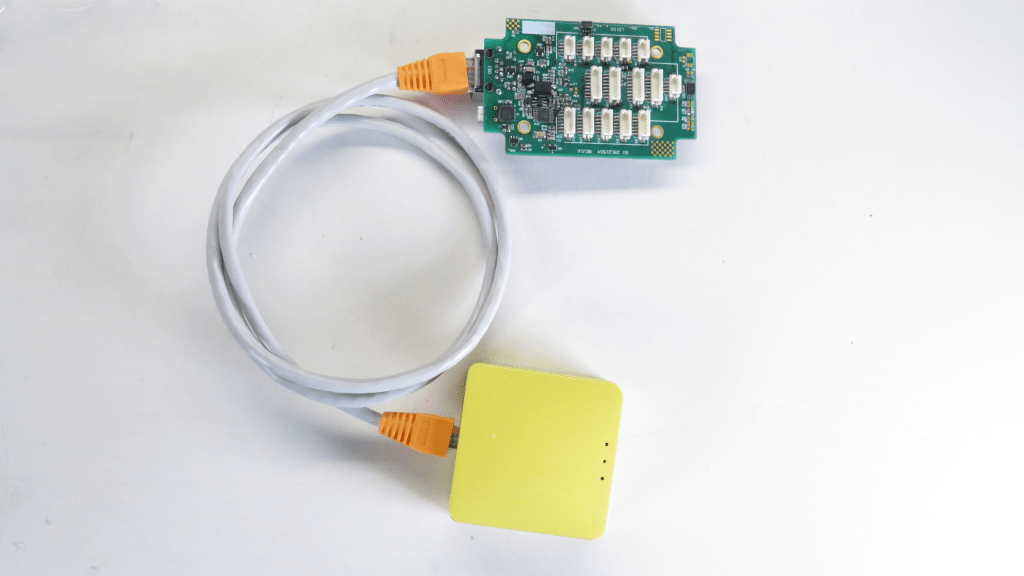
- Put LD100 InstrumentationHub on WiFi if needed with a WiFi adapter.
- Run your process control on our embedded Linux site controller board that also provides remote access if you want.
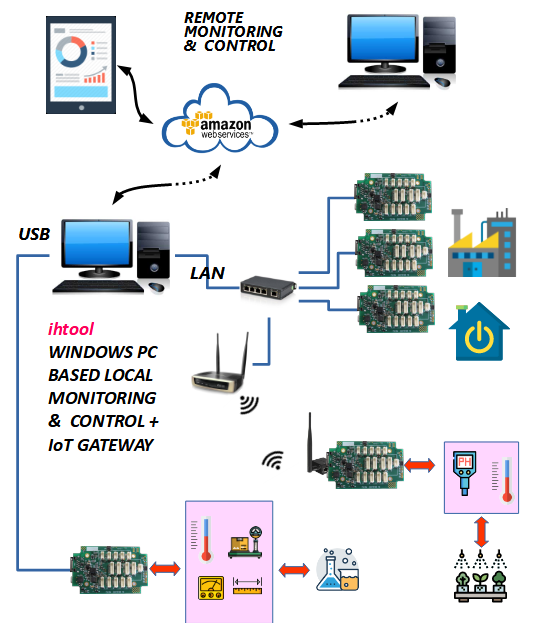
- Monitor and control locally or remotely over cloud services.
- Monitor and control locally or remotely over cloud services.

LD100 Main Features
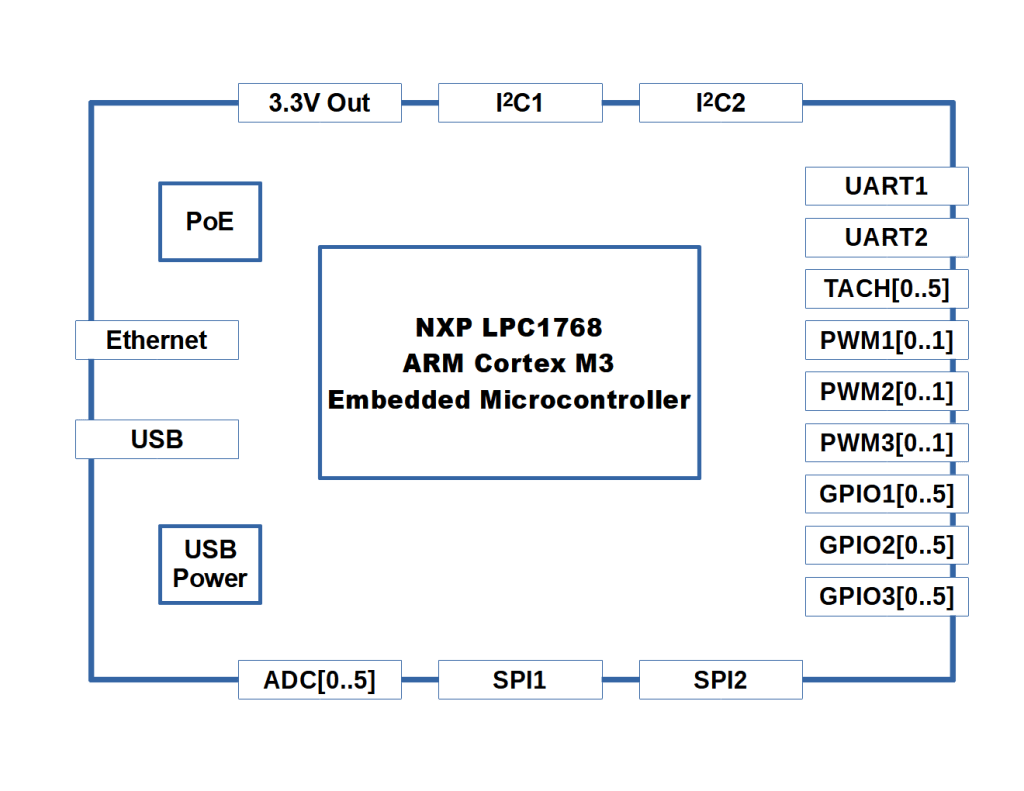
LD100 Hardware Block Diagram
The InstrumentationHub system is a comprised of network or USB connectable 2”x3” interface boards (LD100s) and associated software that runs on a Windows PC (ihtool), our embedded Linux board (ihserver) and Android mobile devices (InstrumentationHub app). Local LAN and remote user clients that wish to utilize the full power of programmability and customization can utilize any platform supporting MQTT and JSON. This includes many high level languages such as Python. Our Android app provides monitoring and control on a mobile device.
The LD100 provides:
- Connectivity interfaces: Ethernet 10/100, USB, WiFi with optional module.
- Peripheral I/O: serial, i2c, SPI, ADC, GPIO, Frequency counter, PWM
- Serial over LAN: Serial to Network enables serial devices to connect to the network. Extend the life and utility of existing serial devices. (i.e. old instruments with a serial interface)
- LAN traffic secured with encryption. Network and web wide secure access.
- Provides 3.3V power to connected devices.
- Powered from: Power over Ethernet (PoE), or USB
- Fully isolated Power over Ethernet provides 1500 VAC galvanic isolation and reduced noise. Eliminates the cost and danger of wiring AC power to each monitored point. Can be located up to 300 ft away in unprotected environment (i.e. industrial, farm environments). Increased protection from power outages because a single UPS can provide backup power to all connected devices. Conversely each node can be powered off individually. In wired mode, can be located wherever a LAN cable can be run.
- Auto-configuring via DHCP: no need to configure each node when network equipment is changed or updated. Install and forget.
- Can be directly attached and powered from a PC over USB.
- No user programming necessary. Plug in and be operational with the PC GUI application (ihtool) immediately.
- Pre-programmed with support for sensor boards from a multitude of vendors (i.e. Sparkfun, Adafruit, Atlas Scientific). New devices added regularly.
- PC and embedded Linux applications provide IoT gateway facility to local and remote clients over cloud services.
- High level language programmable for users to write their display, logging, control client applications without having to deal with low level hardware details. Run on any networked platform.
- Control applications can be run on our embedded Linux board (ihserver) allowing a site setup that is self contained.
- Unlimited number of boards can be networked and controlled.
Applications
- Server rooms: computer power/temperature monitoring, remote reset. Console serial access.

- Office and residential premise building management: Heating/cooling control. Security. Lighting control. Air quality monitoring: VOC, O2, CO2, CO. Electrical power consumption monitoring. Flooding detection. pH, Oxygen Reduction Potential measurement for swimming pool water chlorine effectiveness.
- Storage of food and drugs: Temperature control, monitoring, logging and alarm notification. pH measurement of milk to prevent curdling.
- Brewing: fermentation, distillation control. Measuring mash, wort, wastewater pH. Turbidity measurement during filtration. Dissolved oxygen measurement for yeast propagation, wort aeration, water de-aeration, blending, filtration and filling. Measurement of residual oxygen content in CO2 gas. Color measurement in blending. Conductivity measurements for wastewater.
- Technological processes and production: Oven, incubator temperature control. Freezer temperature monitoring. pH and conductivity measurement in reverse osmosis. pH and conductivity measurement in de-mineralization. pH and Dissolved O2 measurement in boiler feed-water. pH, conductivity and turbidity measurement in re-boiler condensate and condensate returns. pH measurement in chemical reactors, strippers, gas scrubbers. Conductivity measurement for chemical concentration control. Turbidity and pH control in crystallization processes. Turbidity measurement in centrifuges and filtration. Liquid – liquid separation based on conductivity. ORP measurement to regulate biocides. pH measurement for plating, etching of metal surfaces and assembling of batteries.
- Laboratory instrumentation: Build your own scientific instruments or control existing ones. Modern scientific instruments require automation. It is not sufficient to measure one physical variable. Variables have to be monitored and logged. And this in many cases has to be done remotely. Instruments often need closed loop control. You read a variable then change a setting and the do another reading such as in spectroscopy. Our tools give the users ability to start building more complex and better scientific tools and instruments easily and inexpensively. As an example a PCR thermocycler is one of the basic tools in molecular genetics for amplifying genes. The cheapest PCR device on the market is $600. Using the InstrumentationHub tools a user can easily develop their own PCR for less that $20 in additional materials and sensors.
- Meteorology: Atmospheric pressure, temperature, humidity, wind speed monitoring.

- Agriculture/Aquaculture/Hydroponics/Aeroponics: light intensity, IR spectroscopic signature, salinity, pH and electrical conductivity of nutrient solutions, soil moisture monitoring, air humidity. Ambient CO2 concentration measurement and control of CO2 generators. Control of nutrient pumps, sprinkler valves and lights. Control of dosing peristaltic pumps (DC motor or stepper motor driven).
Supported Sensors

Soil & Liquid
- Moisture
- pH (our own isolated amplifier+ADC board)
- Electrical Conductivity (our own isolated amplifier+ADC board)
- Dissolved Oxygen
- Oxygen Reduction Potential
- Flow rate
- Fluid Pressure
Atmospheric
- Dust
- Gas Sensors H2, LPG, CH4, CO, Alcohol, Propane, CO2, O2
- Relative Humidity & Temperature
- VOC
- Barometric pressure
- 6 channel near Infrared spectrophotometer
- 18 channel full visible spectrum spectrophotometer

Electrical control
- Solid State Relays
- Mechanical relays
- AC power measurement
- DC current and voltage
- Signal generator (3MHz) output (sine, sawtooth, square wave)
- Frequency counter
Display
- OLED display
Mechanical
- Load cell amplifier
- IR time of flight distance measurement
Thermal
- Thermocouple
- IR Thermometer
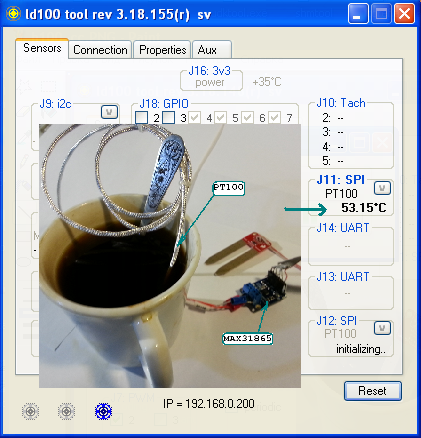
- RTD platinum thermometer
- Semiconductor thermometer
- Thermistor
Air Flow
- Pressure
- Anemometer
Connectivity
- WiFi
- Ethernet
- USB
Motion control
- PWM DC Motor Driver
- Step motor driver
Motion sensing
- Accelerometer
- Compass
- Gyroscope
Serial over LAN
- Connect to server terminal I/O and serial driven test equipment
GUI features
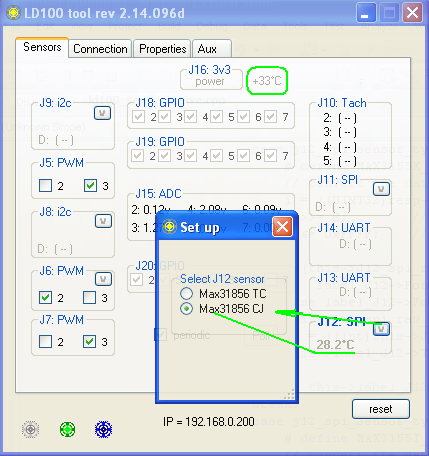
- All communications with LD100 devices are encrypted and password authenticated.
- Change & save password.
- Support for multiple LD100 devices.
- Show device capability i.e. sensor types.
- Start/Stop periodic sensor polling, set polling frequency.
- Set alerts.
- Saving to log file sensor readings as result of periodic logging. Fast, flexible, and low-cost method to collect and store data from your instruments
- Saving and restoring configuration settings.
- IoT settings
- Dynamically change units displayed depending on the connected sensors.
- Changing the pulse width and frequency of PWM outputs of LD100
- Changing the BAUD rate of UART inputs on LD100.
- Setting of scale factors on ADC inputs to display correct voltage levels.
- Setting of individual GPIO pins as input or output.
- Switch peripherals individually on/off.
